
Clear Aligners vs Braces: Which Is Right for Your Smile?
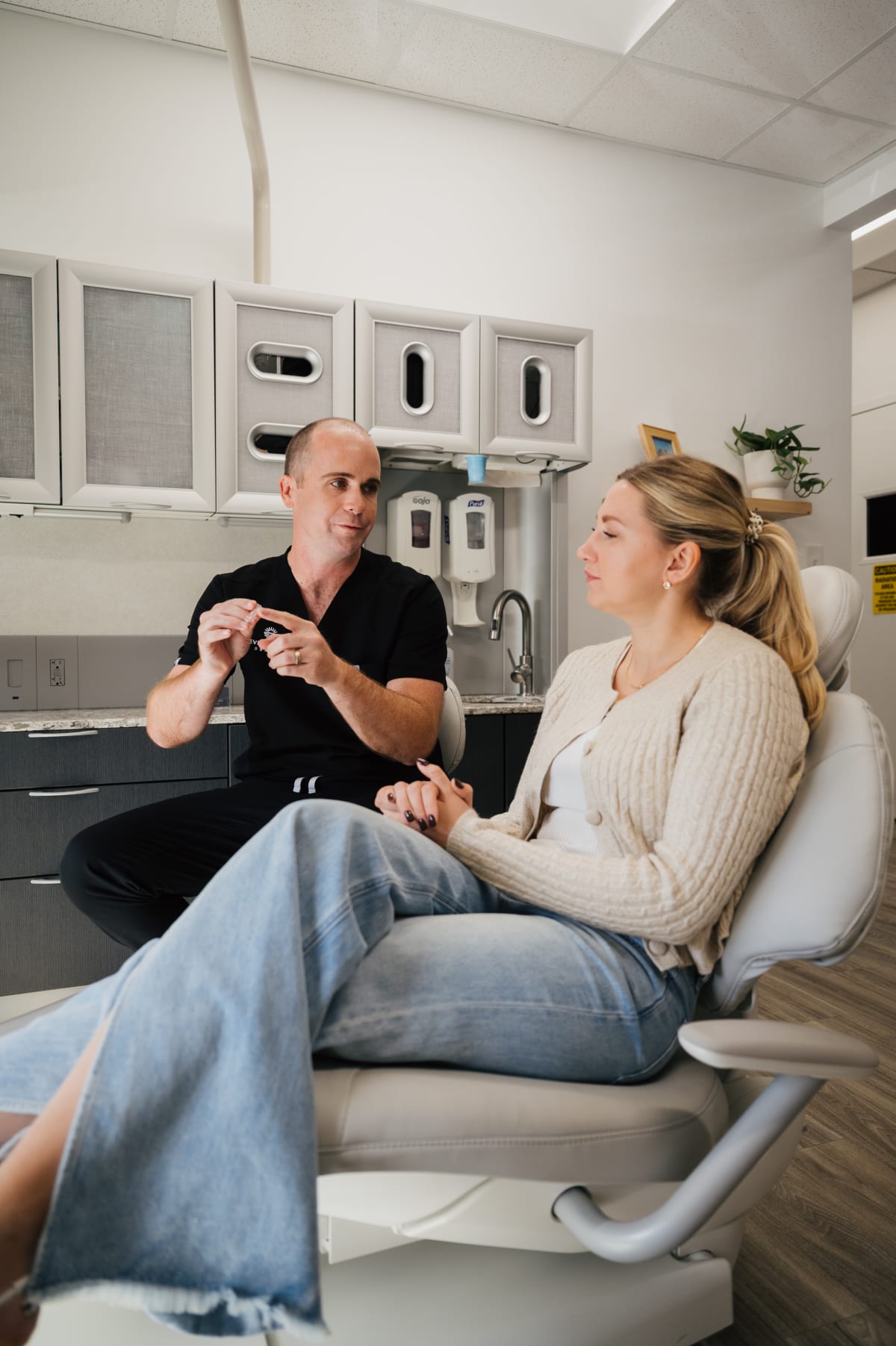
Clear Aligners vs Braces: What You Should Consider Before Deciding
If you're weighing clear aligners against braces, neither one wins across the board. The right pick comes down to three things:
- How complicated your case is
- How each option fits the life you actually live
- The skill of the person guiding your treatment
Clear aligners work beautifully for mild to moderate cases and tend to slide into adult life more easily. Braces still have the edge for tougher tooth movement and complicated bites. What matters more than the system itself is getting an accurate read on what your teeth genuinely need, from someone willing to tell you the truth even when it isn't the easy sell.
This guide covers every part of the decision so you can choose with confidence, whether it's your first round of treatment or a second pass at something you handled as a teenager.
Dr. Fischer and the team at Everything Dental in Charleston take this conversation seriously, which is why every case starts with a real evaluation before anyone talks trays or brackets. If you'd rather just talk it through, we're at (843) 755-6602.
What This Guide Covers
Here's the ground we'll walk through, start to finish:
- Why so many adults are straightening their teeth now, and why that's completely normal
- What actually causes crooked teeth, crowding, and bite problems
- How a real orthodontic assessment figures out what your teeth need
- What clear aligners are, how they differ from the Invisalign brand, and the myths around both
- The full range of braces and other orthodontic options, including ones we don't provide
- How case complexity shapes which option fits, and where aligners hit their limits
- The honest lifestyle questions worth asking yourself
- Real cost ranges, insurance realities, and financing
- Treatment timelines, the refinement phase, and lifelong retention
- How straightening ties into your broader dental health
Why So Many Adults Are Reconsidering Their Smile Right Now
There's a real shift happening, and it isn't just a passing trend. Adults in their 30s, 40s, and well beyond are pursuing orthodontic treatment in numbers we didn't see a generation ago. Some had braces as kids but never quite finished. Some grew up without steady access to dental care and are finally in a position, financially and personally, where they can do something about it. If that's your story and you've been putting it off, our clear aligner options in Charleston are a common first step for adults getting back into treatment.
The professional side of it is real too. How you present yourself at work matters. A smile you keep hiding can quietly shape how you show up in a meeting, on a video call, or when you meet someone new. That isn't vanity. It's confidence, and confidence carries weight in both your career and your everyday life. If your goals lean cosmetic, our cosmetic dentistry services can round out the picture alongside alignment.
What Causes Crooked Teeth, Crowding, and Bite Problems
Before you decide how to fix something, it helps to understand what you're actually correcting. Teeth don't shift at random, and most adult alignment issues trace back to a handful of causes.
- Genetics and jaw development. The size of your jaw and the size of your teeth don't always match. When there isn't enough room, teeth crowd and overlap. Bite patterns like overbites and underbites often run in families too.
- Natural shifting over time. Teeth tend to drift forward and crowd as you age, even if they were arrow-straight in your twenties.
- Lost retainers, or never wearing one. If you had braces as a teen and stopped wearing your retainer, your teeth almost certainly crept back toward where they started. This is one of the most common reasons adults look into clear aligner orthodontics.
- Missing teeth. When a tooth is lost and not replaced, neighboring teeth can tip or drift into the gap, throwing off the bite around them. Replacing that tooth with a dental implant helps keep the surrounding ones where they belong.
- Old habits and old dental work. Long-ago thumb sucking, tongue thrust, or aging restorations can all play a part in how your teeth sit today.
None of this is a personal failing. Mouths change. Understanding the why helps you and your provider plan a fix that addresses the actual problem.
How an Orthodontic Assessment Diagnoses What Your Teeth Actually Need
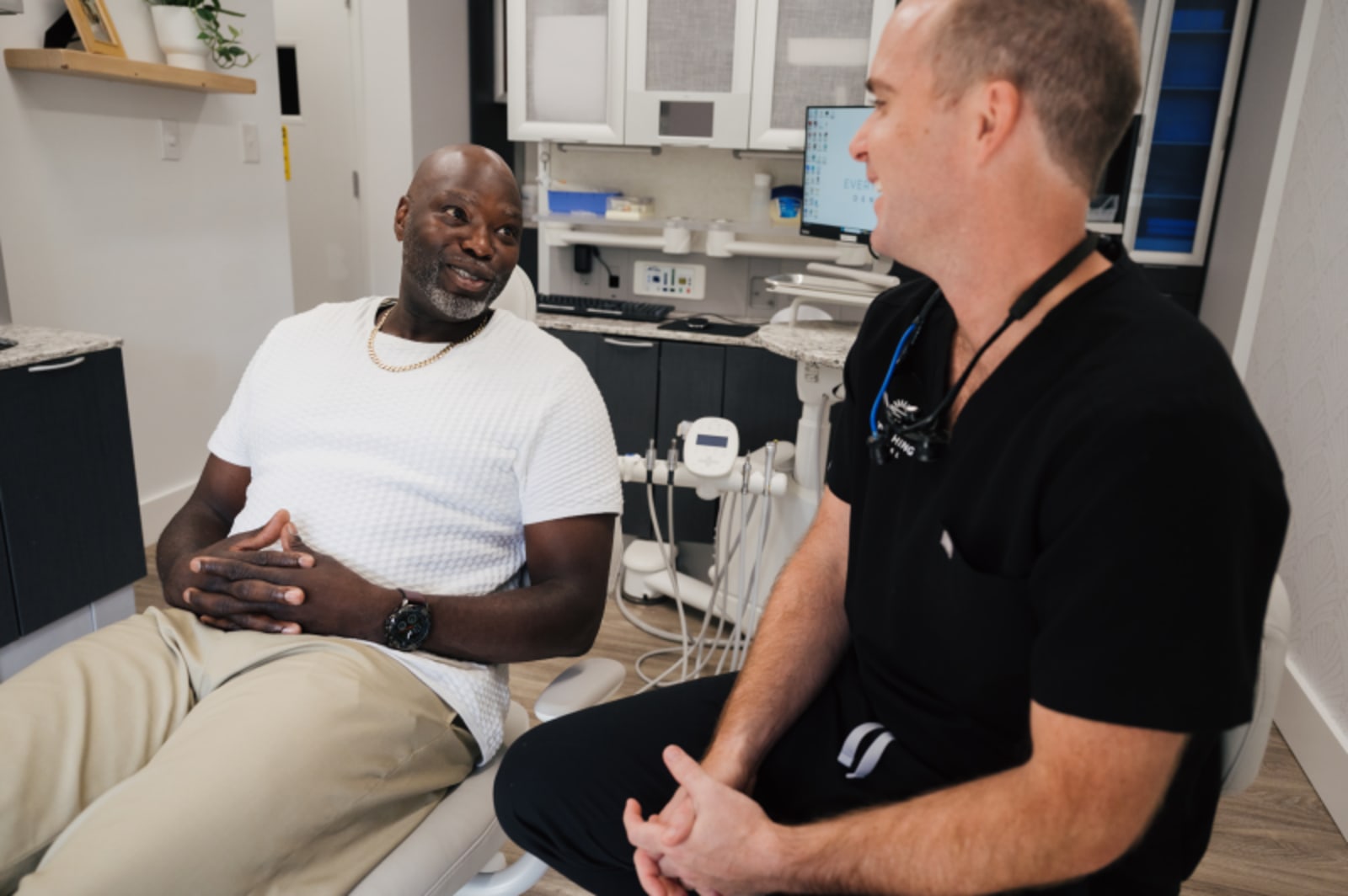
A real assessment replaces guesswork with facts, and it's the step you never want a provider to rush. The goal is to understand your bite, your bone, and your tooth structure well enough to recommend the right approach with confidence.
A thorough evaluation usually includes:
- A clinical exam. Looking at how your teeth fit together, where the crowding or spacing sits, and the health of your gums and any existing dental work.
- Imaging. X-rays or 3D cone beam imaging show what's happening below the gumline: root angles, bone levels, and anything that might complicate movement. We use cone beam imaging in our Charleston office for exactly this kind of detail.
- Digital scans or records. A precise model of your teeth lets a provider map out how each one needs to move, and in what order.
- A bite analysis. How your upper and lower teeth meet matters as much as how straight they look.
This is also where candidacy gets decided honestly. A good assessment tells you not just which option could work, but which one will give you the result you're after.
What Clear Aligners Actually Are (And What They're Not)
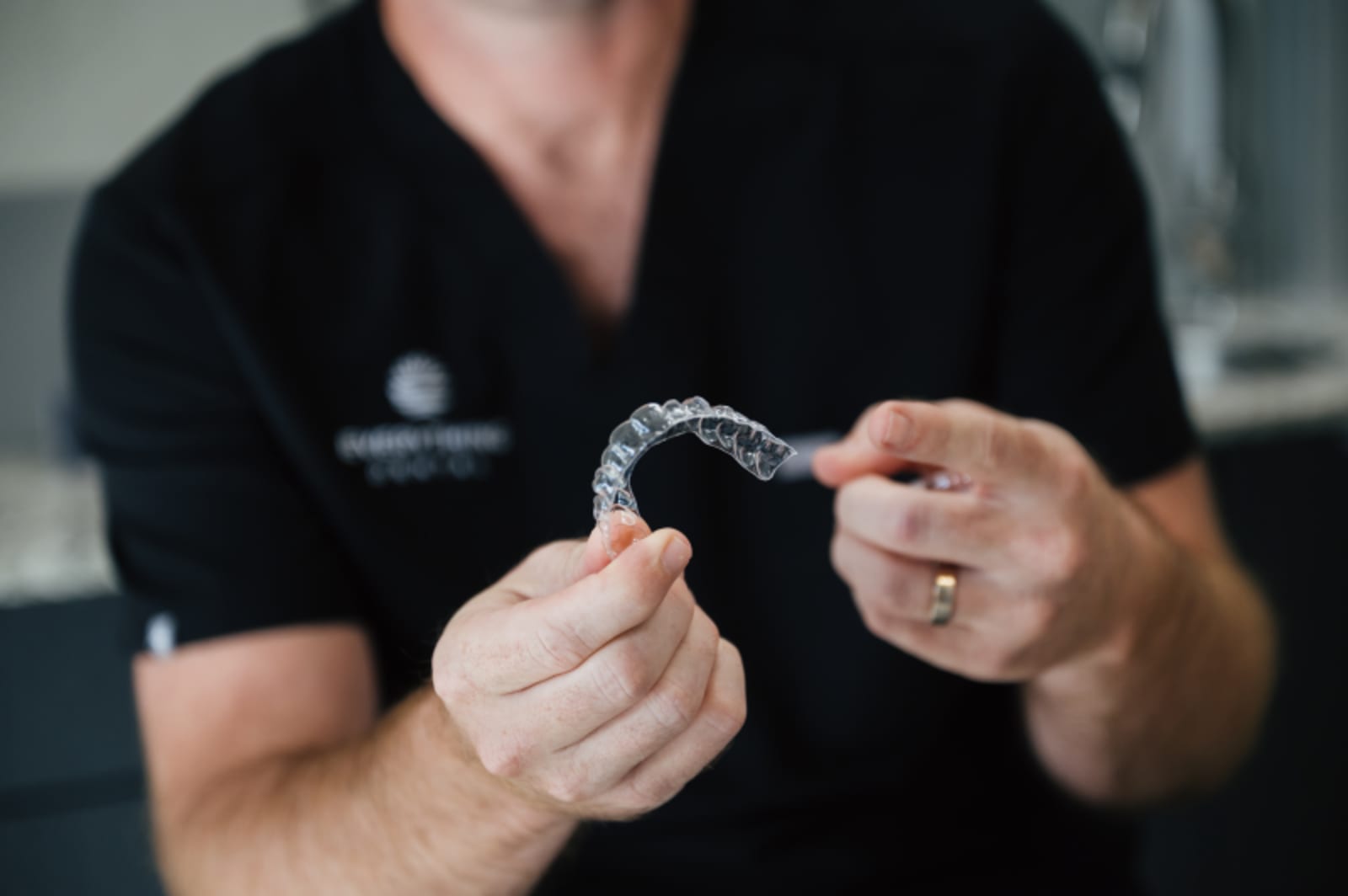
Clear aligners are a category of orthodontic treatment, not a single product. A series of custom-made clear plastic trays is fabricated to fit your teeth at different stages of movement. You wear each tray for a set number of days, then swap to the next one. Over time, your teeth shift gradually toward their planned final position. No brackets, no wires, and the trays come out for eating and brushing.
Invisalign is the most recognized name, but it's one of several systems out there. That's why people like you might search things like "clear aligners vs Invisalign, what are my options." The brand became so dominant that many folks don't realize the category is broader than one company. If you're weighing your choices, our Invisalign and clear aligner therapy page walks through how we approach each case.
A few things worth knowing before you decide:
- Aligners aren't automatically the faster or easier route to straight teeth. Sometimes they are, sometimes they aren't.
- They aren't a mail-order shortcut that skips clinical oversight. A well-planned case needs judgment at every stage, not just a scan and a stack of trays.
- They don't work for everyone. Some bites respond beautifully; others genuinely need braces or a combined approach.
The technology is only as good as the person planning and monitoring it. At our Charleston practice, Dr. Fischer plans and monitors every case personally, so you're never handed a stack of trays and left to figure it out.
Traditional Braces and Other Orthodontic Options Explained
Braces have been refined for decades, and "braces" today covers far more variety than the metal-mouth image most adults picture. To make a fair comparison, it helps to know the full menu, including options we don't provide ourselves.
- Traditional metal braces. Brackets bonded to each tooth, connected by a wire that's adjusted over time. They're the most versatile option and still the gold standard for complex movement. They're also the most visible.
- Ceramic (clear) braces. Same mechanics as metal, but with tooth-colored or clear brackets that blend in more. Less noticeable, though they can stain and tend to cost more.
- Lingual braces. Brackets mounted on the back of the teeth, hidden from view. Effective but specialized, often pricier, and they can take some getting used to.
- Self-ligating braces. A variation that uses a built-in clip instead of elastic ties to hold the wire, which can trim down some appointments.
- Hybrid and combination approaches. For some cases, a provider might use braces for part of treatment and aligners for another, or pair orthodontics with other procedures. Because we offer a broad range of services under one roof, we can coordinate that care in one location.
Braces stay on the whole time, which takes the compliance question off the table, and they handle big, stubborn movements that aligners can struggle with. The tradeoff is visibility, more foods to avoid, and careful cleaning around the brackets. Whether that's worth it depends on your case and your priorities.
How Case Complexity Changes Everything
Most people assume the aligners-versus-braces choice comes down to preference: looks, comfort, convenience. Those things matter. But the biggest factor isn't just what you want. It's what your teeth need, and that runs along a spectrum.
- Mild cases. Minor crowding or small spacing gaps. Often genuinely well-suited to clear aligners, with excellent results in skilled hands.
- Moderate cases. Minor bite issues or mild rotations. The answer hinges on the aligner system, the provider's experience with it, and how closely they monitor your progress.
- Complex cases. Significant bite correction, severe rotations, or movements involving existing dental work like crowns and implants. This is where the right plan matters most.
Cases involving existing dental work or significant bite correction need careful planning from the start. Finding out mid-treatment that aligners can't deliver the result you need is frustrating and expensive. A thorough assessment upfront is how that gets avoided, which is why we don't skip it.
Some cases simply aren't good aligner candidates, and a provider who says otherwise without a close look is a concern worth taking seriously. These questions can help you get a clearer read at any consultation:
- What specific issues are you treating in my case, and why is this the right approach for them?
- Are there limitations to this treatment for my particular bite or tooth structure?
- What happens if my teeth don't track as expected?
Lifestyle Fit: The Questions Worth Asking Yourself Honestly
Before you commit, sit with a few questions that have nothing to do with clinical outcomes. The right treatment for your teeth isn't always the right treatment for your life, and that gap is exactly where regret tends to live.
Visibility
If you're in client-facing work, presenting often, or just self-conscious about anything new on your teeth, that's real information. Clear aligners are nearly invisible in most lighting. Braces aren't. Neither answer is wrong, but pretending the difference doesn't matter when it clearly does won't help you.
Compliance
This one gets underestimated. Aligners need to be worn 20 to 22 hours a day. That isn't a suggestion; it's the entire system. If you travel a lot, keep unpredictable hours, or know you struggle to stay consistent, be honest about that now.
Eating and drinking
With aligners, you take them out to eat or drink anything but water. Freeing for some, a constant interruption for others. Braces stay put, but bring their own list of off-limits foods and fussier cleaning around brackets and wires.
Comfort
Some people adapt to aligner trays in days. Others find the steady pressure of wire adjustments easier to live with. Both create pressure; they just deliver it differently. What matters is which one you can realistically tolerate for a year or more.
Picking the wrong option for your lifestyle is usually what leaves people wondering if they made a mistake. Getting honest with yourself about compliance now saves a lot of frustration later.
Cost and Insurance: What the Numbers Actually Look Like For Clear Aligners and Braces
Cost is the part too many providers dance around, and that silence frustrates people for good reason. You're being asked to commit thousands of dollars over a long process. Asking pointed questions about price before you sign anything isn't rude or awkward.
What Treatment Typically Costs
Traditional braces generally run between $3,000 and $7,000, depending on complexity, bracket type, and location. Clear aligners fall in a similar range, often $3,500 to $8,000 or more for a full case. The idea that aligners are always the cheaper option isn't accurate. For complex cases they can run higher than braces; for mild cases they can be very competitive.
What Drives the Price Difference
Price differences between providers reflect more than the brand on the box. Provider experience, the level of monitoring built into your care, and how involved your clinician stays throughout treatment all factor in. Before you commit, always ask what's included and what isn't.
Insurance and Payment Options
Many plans with orthodontic benefits cover braces and clear aligners at the same rate, often with a lifetime maximum between $1,000 and $2,000. Coverage varies by plan, so verify directly with your insurer before assuming anything applies. Payment plans are common as well, whether through in-house options or third-party financing.
The sticker shock is real, especially for people finally addressing something they've lived with for decades. At our Charleston practice, we walk through total cost, what's included, what happens if treatment runs long, and all your payment options.
Timeline, Refinements, and Lifelong Retention
How long treatment takes depends on your case, and the honest ranges are wider than most providers advertise.
For clear aligners, mild cases often wrap up between 6 and 18 months. Braces handling moderate to complex movement typically run 18 to 36 months. Those are real ranges, not marketing numbers. Your actual timeline depends on how much movement your teeth need, how consistently you wear your trays, and how your biology responds. Any provider quoting an exact finish date before a thorough exam is skipping steps you don't want skipped.
If you go the aligner route, there's something worth knowing before you start: finishing your last tray doesn't always mean you're done. Many cases include a refinement phase, where additional trays fine-tune the final result. This is a normal part of the process, not a sign that something went wrong.
Then there's retention, which is genuinely lifelong. Both braces and aligners require retainers afterward. Teeth naturally drift back toward where they started, so wearing your retainer as directed protects everything you worked for. Once it becomes part of your routine it's barely a thought, but it is a real and ongoing commitment.
How Straightening Connects to Your Broader Dental Health
Straightening teeth is rarely just cosmetic, even when looks are what brought you in. Alignment touches the health of your whole mouth.
- Gum health. Crowded, overlapping teeth are harder to clean, which can trap plaque and feed gum problems. Straighter teeth are easier to keep healthy, and easier to pair with periodontal care when it's needed.
- Bite and wear. A bite that's off can cause uneven wear, jaw strain, and cracked teeth over time. Correcting it protects the teeth you already have.
- Existing dental work. Crowns, bridges, implants, and fillings all interact with how your teeth move, which is why complex cases need careful planning. If you're considering dental implants, those get factored into your plan from the start.
- Cosmetic and restorative goals. Sometimes alignment comes first so that later work, like veneers or whitening, lands on teeth that are already in the right place.
This is one real advantage of being seen somewhere that handles the broader picture. Because we provide general, restorative, cosmetic, and surgical care under one roof in Charleston, orthodontics can be planned as one piece of your overall dental health.
How to Choose a Provider You Can Actually Trust
The most important decision in this whole process isn't which system or brand you pick. It's who treats you. Get that right and everything else gets more manageable. Get it wrong and even the best technology won't rescue the experience.
People who've been through it say it better than any checklist: "Please everyone do research and take your time selecting your provider. This is the first step and it's crucial." That's hard-won advice, and it lines up with what we hear from folks who come to us after a rough experience elsewhere.
So what should you look for?
- Experience with your case type. A provider who mostly handles straightforward cases may not be the right fit if your bite is complicated. Ask how many cases like yours they've treated and how those turned out. A good one welcomes the question. Dr. Fischer brings 10 years of clinical experience across a broad scope of care, so complex cases don't have to be referred out. Our Charleston practice is set up to handle a wide range of treatments under one roof.
- Clear communication. Do they walk you through options, or steer you toward one answer? Are they honest about what a treatment can and can't do? Those are the questions worth pressing on. If you're weighing your straightening options, our clear aligner care is a good example of how we walk through the trade-offs honestly.
A few warning signs worth watching for during a consultation:
- Dismissing your concerns or rushing your questions
- Pushing upgrades or add-ons before understanding your goals
- Seeming annoyed when you ask for clarification
- Vague answers about what happens if something doesn't go as planned
That last one matters. What separates a trustworthy provider is how they handle the unexpected. A consultation should feel like a conversation, and you should leave with a clear picture of your options and room to think. When you're ready, you can schedule a consultation with our team to talk through your goals.
Ready to Figure Out Which Option Fits Your Smile?
Reading a guide like this is genuinely useful, and by doing so, you've done more homework than most. But no article can tell you what your actual teeth need.
That depends on your bite, your bone, and what you're hoping to change, and it takes someone looking at your teeth to give you a straight answer.
That's what a consultation at Everything Dental is for. Dr. Fischer and the team take time to understand what you want, run a full evaluation, and tell you plainly which options fit your case. Sometimes that confirms what you suspected. Sometimes it points somewhere different because a simpler fix gets you further.
When you're ready, we'd love to take a look together.
Call us at (843) 755-6602 or schedule a consultation at our Charleston office, and we'll help you find the path that fits your smile.
Connect
with uS
Call 843.471.1677 or request an appointment online to set up your first visit. We’ll be in touch soon.